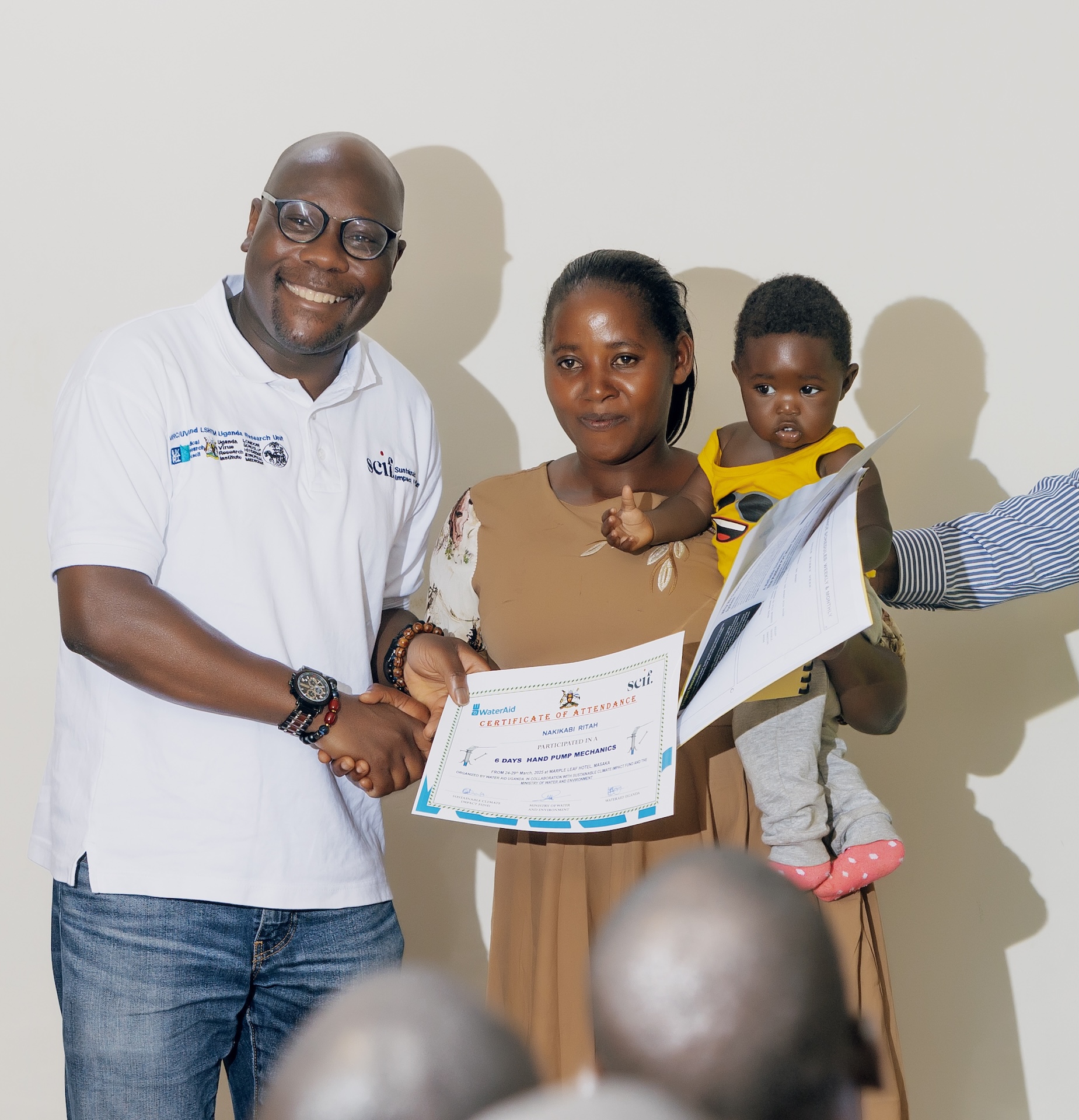
Ensuring long-term access to safe water requires more than the installation of infrastructure. At the Sustainable Climate Impact Fund (SCIF), a key priority is supporting the systems, skills and local capacity needed to keep water sources operational over time.
As part of SCIF’s safe water programme in Uganda, handpump mechanics play a critical role in maintaining and sustaining water infrastructure across rural communities in Kalungu, Lyantonde and Kabarole districts. Their work ensures that water points remain functional, accessible and safe for the communities that rely on them every day.
Through collaboration with WaterAid Uganda and Handpump Mechanics Association, SCIF has supported the training of approximately 50 handpump mechanics across these districts. These mechanics are equipped with the technical knowledge required to diagnose faults, repair damaged components and carry out routine maintenance, helping to reduce downtime and ensure continued access to safe water.
The role of handpump mechanics in sustainable water access
Handpump mechanics are central to the long-term success of water projects. When water points break down, access to clean water can be lost almost immediately, forcing communities to return to unsafe sources.
As described by Kayemba Daniel, Chairperson of the Water User Committee in Birongo C, Kalungu District:
“Some try to boil it, but the firewood is scarce and expensive. So, people end up drinking dirty water.”
This highlights the importance of reliable infrastructure. Without functioning water points, communities are often left with no alternative but to rely on unsafe water sources, with significant implications for health and wellbeing.
Handpump mechanics provide a crucial link between infrastructure and sustainability. Kato Dawson, a trained Handpump Mechanic and Secretary of the Water and Sanitation Association in Kalungu District, explains how this system works in practice:
“We had a borehole breakdown for the past few weeks. Ever since then, we dismantled all non–functional parts and installed new ones. We have water user committees in Kalungu and they have our contact information. In case there is a borehole breakdown, they immediately call us. We come, assess the technical issues and then do the repairs.”
This responsive, locally based system ensures that issues can be addressed quickly, minimising disruption to communities.
As Kayemba Daniel confirms:
“The community can now access water easily.”
To better understand the role of handpump mechanics and the work they carry out, watch the video below:
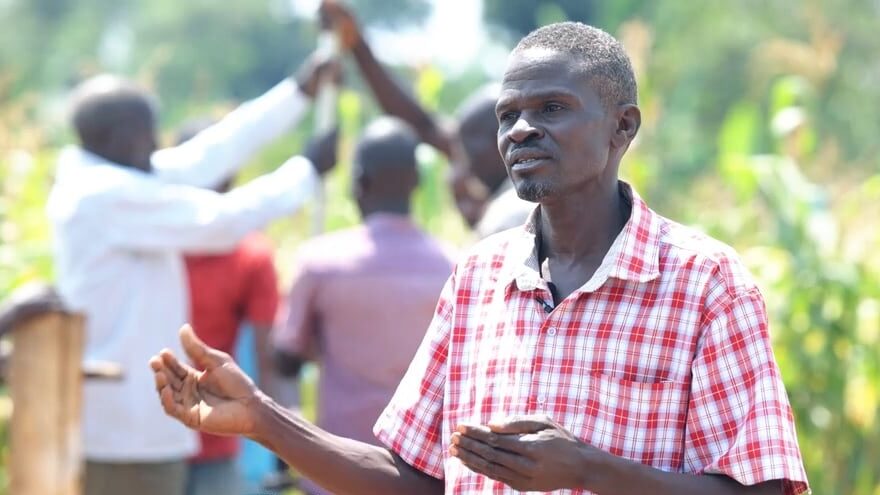
In addition to repairs, handpump mechanics also play an important role in prevention. Many breakdowns are caused not by mechanical failure alone, but by a lack of awareness around proper usage and maintenance. As Kato Dawson notes:
“The common cause of borehole breakdown is the community’s lack of knowledge about the correct use of the pumps. People need to be provided with tips on how to care for their water source.”
To address this, mechanics work closely with communities to provide guidance on how to use and care for water points, helping to extend the lifespan of infrastructure and reduce breakdowns.
Improving hygiene and protecting water quality
The impact of this work extends beyond functionality alone. Handpump mechanics also support communities in maintaining clean and safe water sources, reducing the risk of contamination.
Through ongoing engagement and sensitisation, mechanics help to promote good hygiene practices and safe water handling. As Kato Dawson explains:
“Now that the water sources are near, there is great improvement in community hygiene. We regularly sensitise people to keep water clean even after collecting it from the boreholes, so as to avoid cross-contamination.”
This combination of infrastructure, maintenance and education is essential to ensuring that safe water access translates into meaningful improvements in health and wellbeing.
Ritah's story: Building skills, confidence and opportunity
Alongside the technical role of handpump mechanics, SCIF’s work is also creating new opportunities for individuals, particularly women, within these communities.
Nakikabi Ritah, a Handpump Mechanic in Lyantonde, provides a powerful example of this impact.
Ritah’s story is captured in the video below:
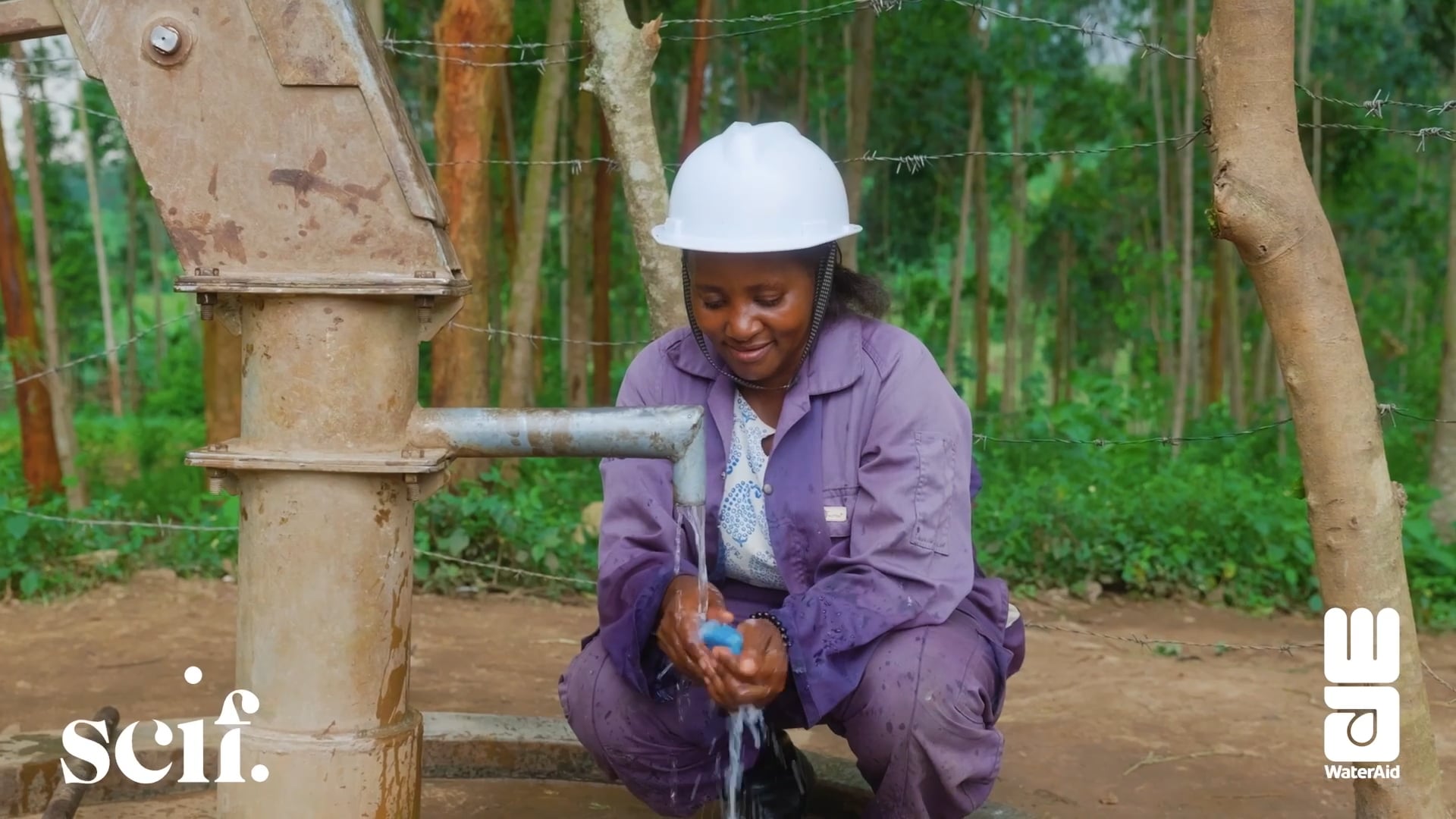
Before becoming a mechanic, Ritah relied on subsistence farming for her livelihood.
“I was a subsistence farmer, and I relied on the seasons for yields. After each seasonal harvest, I’d have debts and I wasn’t able to save anything.”
Her involvement in handpump maintenance has transformed her economic situation:
“When I started repairing boreholes, I am now able to earn a decent income and supplement it with my farming, and I am able to make ends meet.”
Ritah’s story highlights how technical training can provide not only community benefits, but also individual economic empowerment.
Her journey also challenges traditional perceptions around gender roles in technical work:
“Most women are timid, saying that these jobs are only for men. But women can do them too. We can do them and even excel.”
Encouraging greater participation of women
Ritah was one of only three female handpump mechanics across the three districts, out of a total of 30. SCIF profiled Ritah’s story as part of a new handpump mechanic recruitment drive, with the aim of encouraging more women to get involved.
SCIF was able to recruit 13 additional female mechanics out of a total of 20 new trainees. This was in no small part due to Ritah’s story.
This shift demonstrates the importance of visible role models in driving change. By supporting women like Ritah, SCIF is helping to challenge barriers and promote more inclusive participation in technical roles.
Community impact
The benefits of reliable water access are felt across entire communities. Night Proscovia, Chairperson of a local Water User Committee, describes the wider impact:
“The borehole has been a blessing. Especially for us as women and for the children too, as they have been travelling long distances to fetch water and this affected their studies.”
Access to nearby water sources reduces the time and effort required to collect water, particularly for women and children, who are often responsible for this task.
Night Proscovia also highlights improvements in hygiene and daily life:
“Fetching water was a great task which made hygiene and household chores like cooking a great task. The borehole has saved us greatly, as there were many hygiene challenges in the community.”
Reliable access to safe water supports not only health, but also education, productivity and overall quality of life.
From infrastructure to sustainability
This work reflects SCIF’s broader approach to delivering climate impact. By investing not only in infrastructure, but also in local skills, knowledge and ownership, SCIF ensures that water projects continue to deliver benefits long after installation. Through initiatives such as the training of handpump mechanics, SCIF supports practical, community-led solutions that are built to last.
Related projects.
